


From Camaiore to Lucca

Luca is located on a low plain below the foothills of the Apuan Alps, so the walk from Camaiore is a process of dropping out of the hills onto the plain, which means that the landscape becomes less dramatic – still beautiful, but less dramatic.
In the village of Valpromaro, I was moved by this monument dedicated “to the fallen in the Great War”. I thought it expressed a small part of the genuine horror of war.


I had a quiet lunch break at the corner of a church overlooking the valley just outside the village of Piazzano.


The Via Francigena then descends pretty rapidly for several kiliometers down to the plain below on an asphalt road before it finally crosses the Serchio River and turns down a quiet gravel road along the river for another few kilometers before entering the city of Lucca through an impressive gate.


Lucca


Lucca is one of the most significant cities on the Via Francigena for numerous reasons. It was founded in the 3rd century BC by coastal tribes, and the Romans then developed it as a typical Roman city with four major city gates, a forum, and an amphitheater. The city ultimately became a major center of Christianity with over 100 churches, including the Duomo of San Martino, which holds the Volto Santa, a carved wooden crucifix, which was brought to Lucca in 782 and is now one of Italy’s most beloved relics.
The city is known for its fully-intact Renaissance-era city walls that run for 4 kilometers around the city of red-roofed medieval buildings and cobblestone streets. Lucca was also the birthplace and home for many years of Giacomo Puccini, the famed opera composer. Arts and music remain a vital part of life in Lucca.


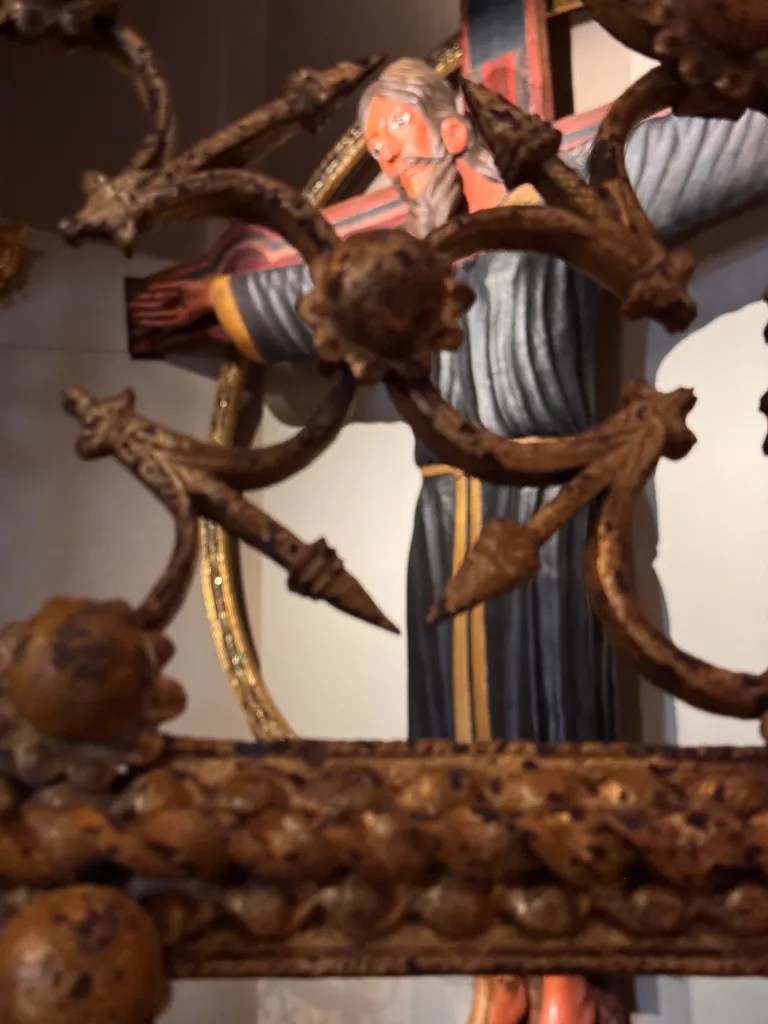


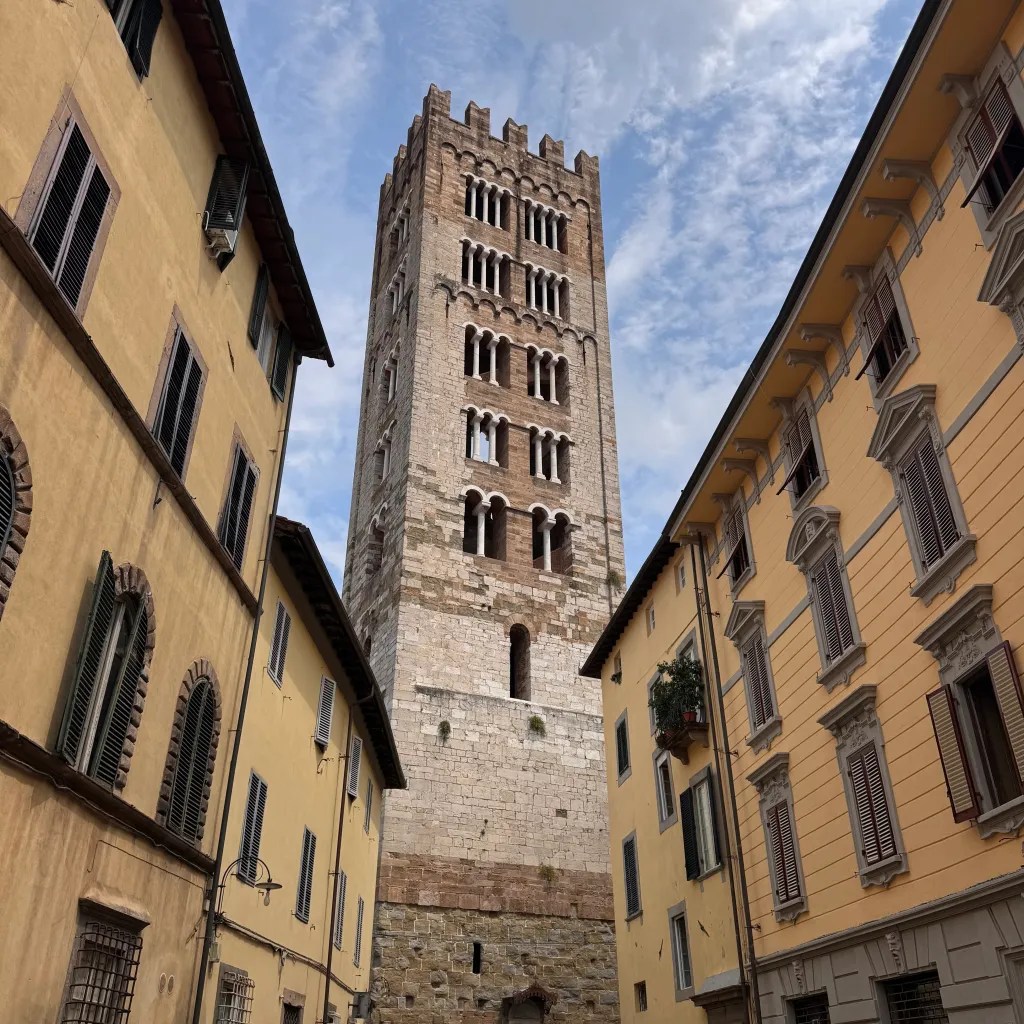


Puccini
Every night of the year, there is a concert of arias from Puccini operas in the Church of San Giovanni, adjacent to the Duomo of San Martino. I know nothing about opera, but I attended the performance on Sunday night, and it was one of best experiences of my pilgrimage.
I’ve learned in Europe to never pass up an opportunity to attend a local concert of any kind. You don’t have to know anything about what is being performed to enjoy it.


Next up: San Miniato – 367km to Rome!
Discover more from Wanderings With Charles
Subscribe to get the latest posts sent to your email.
4 Responses
Massive fires in Spain & France. News said 300,000 displaced persons. Fires have burned an area the size of Madrid, Spain. The fireman are not yet putting much of a dent in it. News said it it would take a long time to put it out. Glad you are in Italy.
A pilgrim I met today had just started yesterday in Lucca, and he asked me if I had endured much rain on my walk. When I thought about it, I realized that the only material rain I’ve experienced since central France (I recall) was a morning thunderstorm a couple of days ago in Lucca. If it is that dry across southwestern France and northern Spain, I’m sure the forests are just tinderboxes. Fires like that are horrible because it takes so long for the forests to recover.
Charles:
There seem to be a vast number of extended walks – treks, trails, pilgrimage routes, etc – available in the world. How is it that you chose the Via Francigena for your substantial undertaking? (If you’ve answered this question before and I missed it, please disregard my question.)
Dave Miller
Because I had walked the Camino Portuguese in Portugal and Spain, I had learned about the network of Caminos throughout Europe. Many of them link up with the Caminos de Santiago in Spain, and many of them link up with the Via Francigena to Rome. I loved my experience on the Camino Portuguese, in part because pilgrims are supported (and even celebrated) with services and accommodations. You aren’t just a random guy with a backpack.
I also walked a section of the Chemin de Saint Jacques de Compostelle from Le Puy en Velay (France) to Conques. That was also a marvelous experience. The first pilgrimage that most people think about now is the Camino Francés in northern Spain (780km from Saint-Jean-Pied-de-Port, France in the Pyrenees to Santiago), but it has become so popular in the last few years that it’s actually crowded in places. I was looking for something more contemplative, and the idea of doing a longer walk also appealed to me. I love London and France, and the idea of walking to Rome on an ancient pilgrimage route that crossed southeast England, France, Switzerland, and Italy really appealed to me. It has lived up to my expectations. I wish it were cooler now in Tuscany, but that is just the reality of the length of the walk. You have to wait to start it until spring has arrived, and by the time you get to Italy, it’s going to be high summer.
There are, of course, extended wilderness trails in the U.S. (the Appalachian Trail, the Continental Divide Trail, and the Pacific Coast Trail are the most well-known), but those are really big time and physical commitments. I love backpacking, but I’m not sure if I’m ready for a multi-month wilderness trip at this point.
There are other walks around the world I’m interested in, but I don’t have a specific one picked out yet.